
Every day a new adventure
Our personal guide to the Riviera of Flowers
With coffee on your terrace
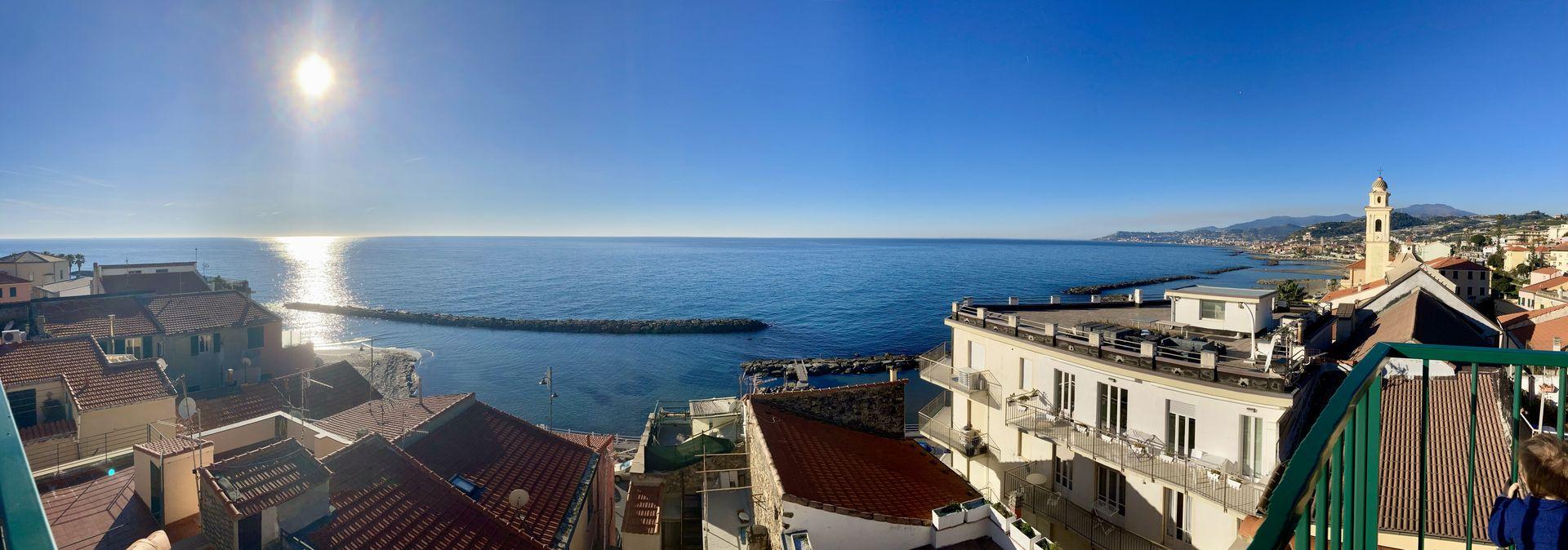
The sun warms the terracotta tiles, sea and rosemary fill the air, and your first sip of coffee tastes of calm. Below, the village slowly wakes — a baker opens his shutter, voices rise from the square.
Between sea and olive trees, you ask yourself the only question that matters: what shall we do today?
Liguria — to feel, to live, to be surprised
Liguria isn't a checklist — it's a place to live. This winding coastline is wedged between the azure sea and the mountainous hinterland of Alps and Apennines. The result: a unique microclimate of mild winters, glorious summers, and always that salty breeze.
Contrasts everywhere: holm oaks and olive trees against rough cliffs, fishing harbour beside a medieval town, a market under an ancient tower. Within a few kilometres, you go from beach to mountain village.
The charm? The variety. A morning swim in a hidden cove, lunch on a village square, an afternoon among the vineyards. Each day, you choose: explore or slow down.
Santo Stefano al Mare — Home
Down on the Via Roma, the main street of the historic centre, life gently picks up. A greeting between neighbours, children playing on the square, a market stall opening. No noise — just smiles.
Santo Stefano lives with the sea, but stays small and real. Narrow alleys, pastel facades, and a village square that comes alive with music, family events or chestnut festivals through the seasons.
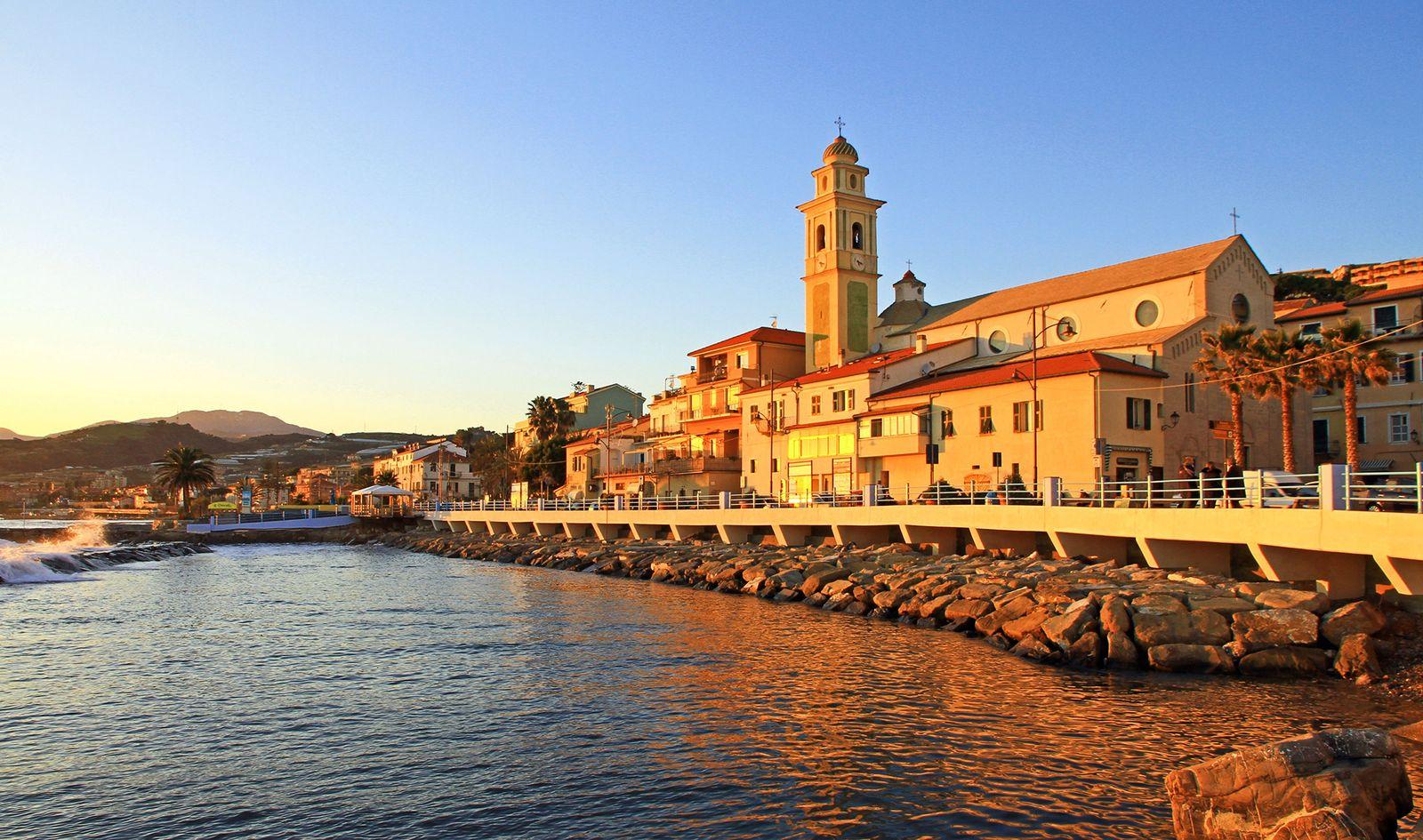
Step out of the apartment and you're in the middle of it all. Via Roma is the spine: shopkeepers, cafés, pharmacy, butcher, supermarket, restaurants… Just behind: stone walls that once protected from pirates, and a promenade with views of fishing boats in small bays.
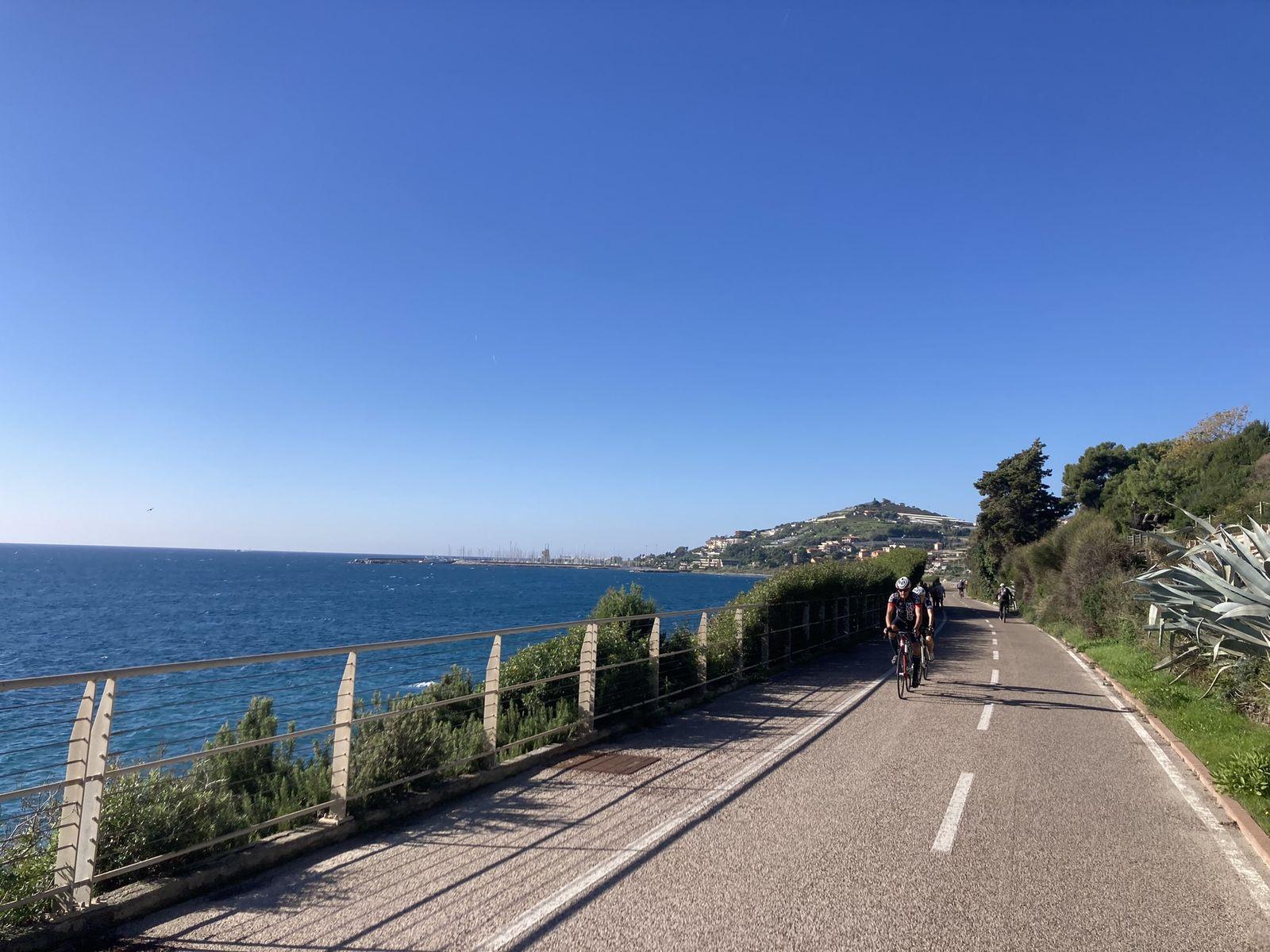
The Pista Ciclabile is a short walk away: an old railway turned into a flat, car-free path along the sea — perfect for cycling, walking, or just listening to the waves.
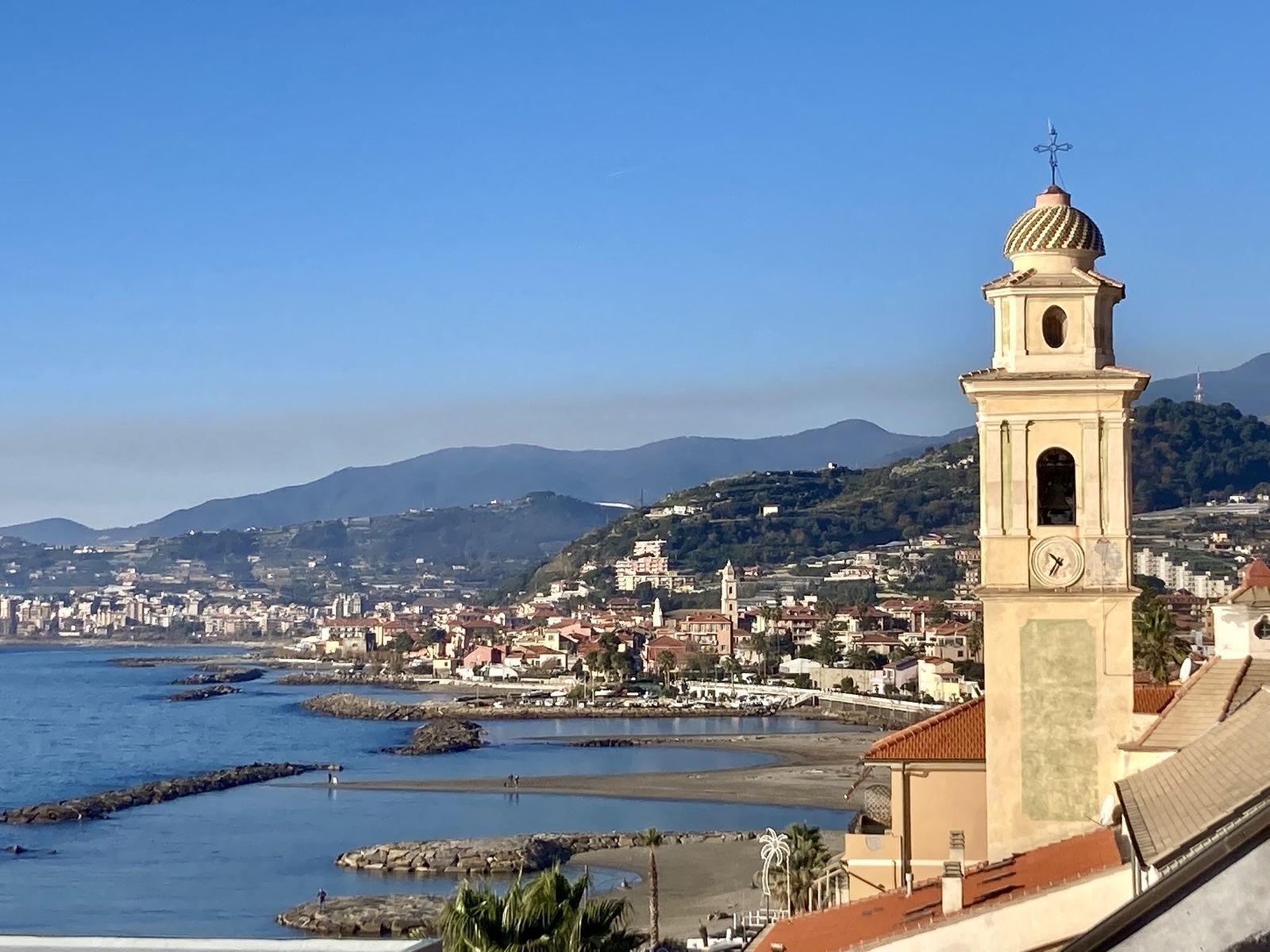
Inland, hills, vineyards and chapels with sea views, sometimes all the way to France. The old church of Santo Stefano Protomartire offers a moment of calm.
Just next to the centre: Marina degli Aregai. Larger, more modern, with gleaming sailing boats and lively cafés. But the real charm remains the old village, where you dine under olive trees with fresh fish and warm hospitality.
Cycling along the coast
More than 40 km of flat, car-free cycling along the coast on a former railway line — sea views, flowers, shady tunnels and fresh air: the Pista Ciclabile is undoubtedly one of the finest cycle routes in Liguria.
From Santo Stefano al Mare you can head one way to Sanremo via Riva Ligure, Arma di Taggia and Bussana. The other way takes you through San Lorenzo al Mare, charming Porto Maurizio, Imperia and on to Diano Marina.
Hire bikes easily at Pedala… Pedala…, a small local rental on the Via Roma. Regular bikes (± €15/day), e-bikes (± €30/day) and child seats available.
Cycling here is the most enjoyable way to get around: no parking stress, fresh air in your face, and a view at every turn. Suitable for everyone: flat, safe, panoramic.
Porto Maurizio — A village like a painting
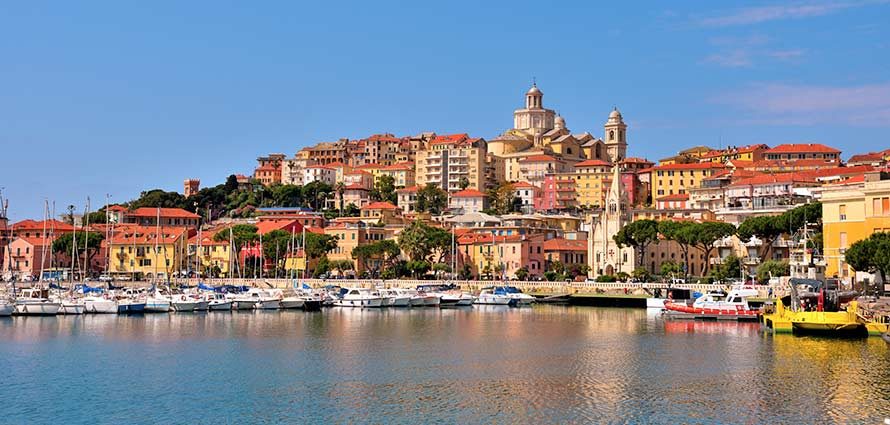
Arriving in Porto Maurizio feels like a breath of air. On the headland above the sea, alleys climb past old palazzi up to Parasio, the historic heart of this proudly characterful quarter of Imperia.
On foot the charm reveals itself: stone steps, arches, flowers at windows, views of sea and mountains. Three small lifts link the harbour to the top, but those who climb are rewarded — culminating in the white basilica of San Maurizio.
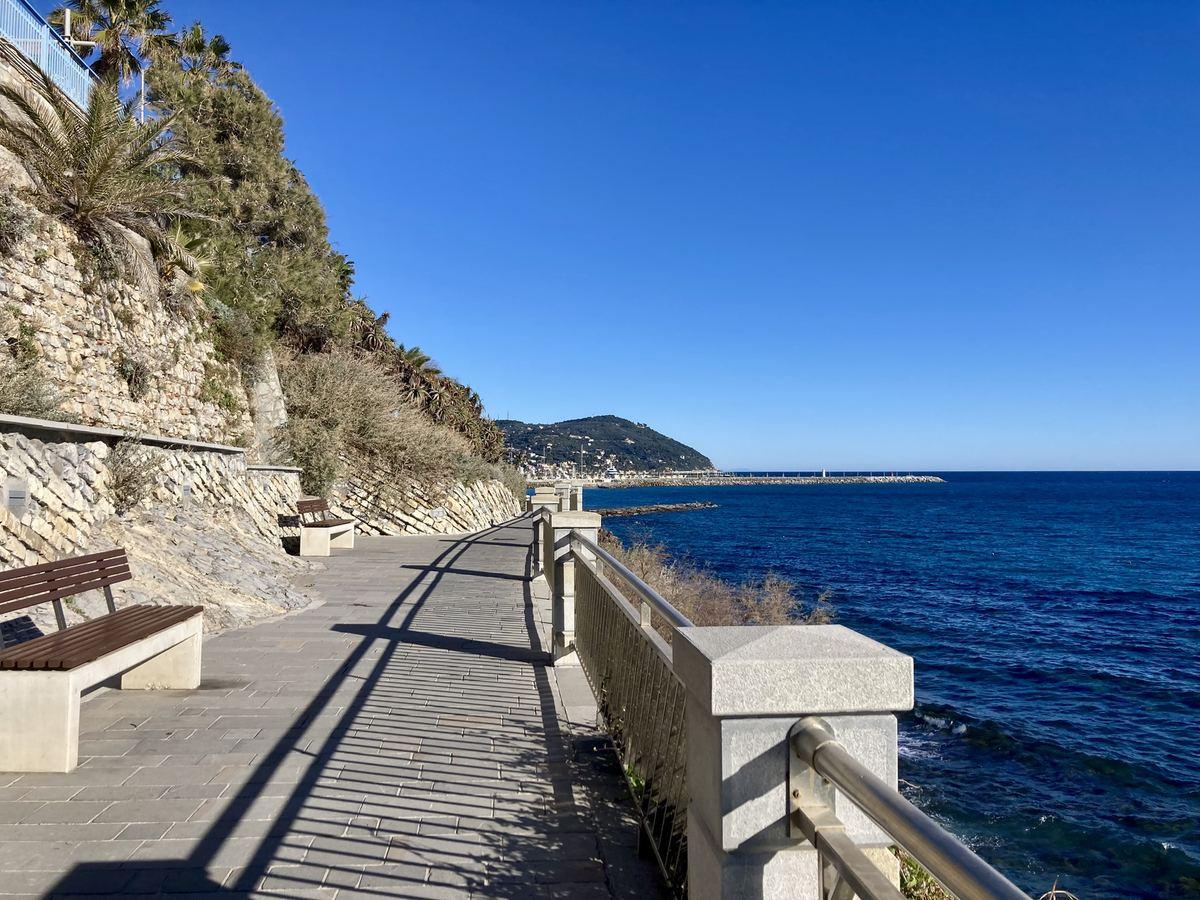
From there, walk the Passeggiata dell'Amore, a romantic path above the sea, with the scent of pines and the cry of swallows.
Down at the harbour: fishing boats, elegant yachts, sandy coves and restaurants where the fish still tastes of the sea. You eat next to locals — simple, lively, real.
Sanremo — A city full of culture
Sanremo, la Città dei Fiori, is the lively queen of the Ligurian coast. Nestled between hills and bay, she blooms all year. In March, flowers and tradition celebrate during the Corso Fiorito — a colourful parade through the centre.
Along the sea, stroll the elegant Corso dell'Imperatrice — palms, Art Nouveau casino, Teatro Ariston (home of the famous Festival della Canzone Italiana). For shopping or a stylish coffee, head to the Corso Matteotti.
Above the city, La Pigna, the medieval core. Steps, arches and alleys lead to the Santuario della Madonna della Costa, with views as far as France. Belle Époque villas and a Russian Orthodox church recall past grandeur.
Active too: cycle the Pista Ciclabile, hike clifftop paths, golf among olive trees. In March the Milan-Sanremo cycle classic ends here.
The city hums year-round: music festival, flower parade, rally, concerts, gastronomy… Even the plate blooms — gamberi rossi, pansòuti, risotto with petals. Whether you come for culture, sea, shopping or atmosphere — Sanremo stays with you.
Bussana Vecchia — An artists' village like a tale
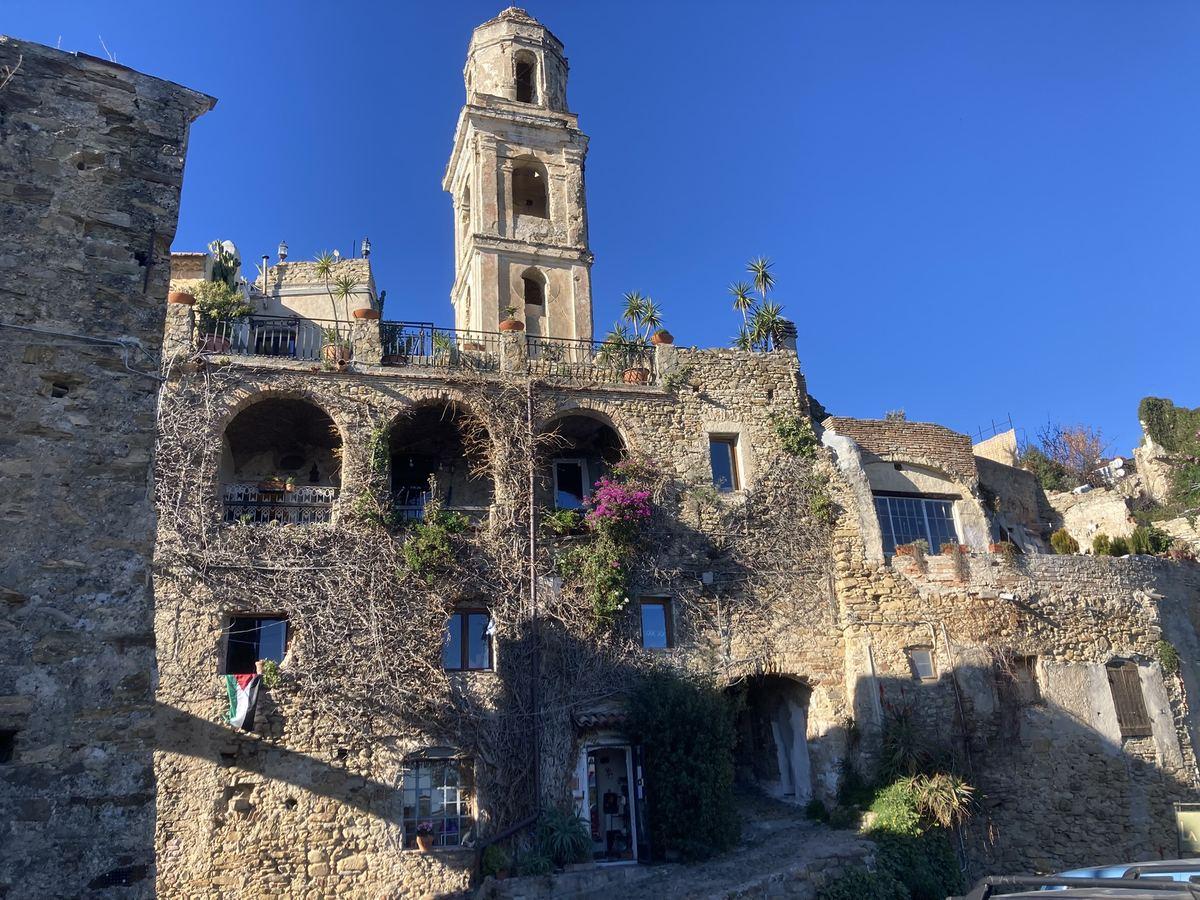
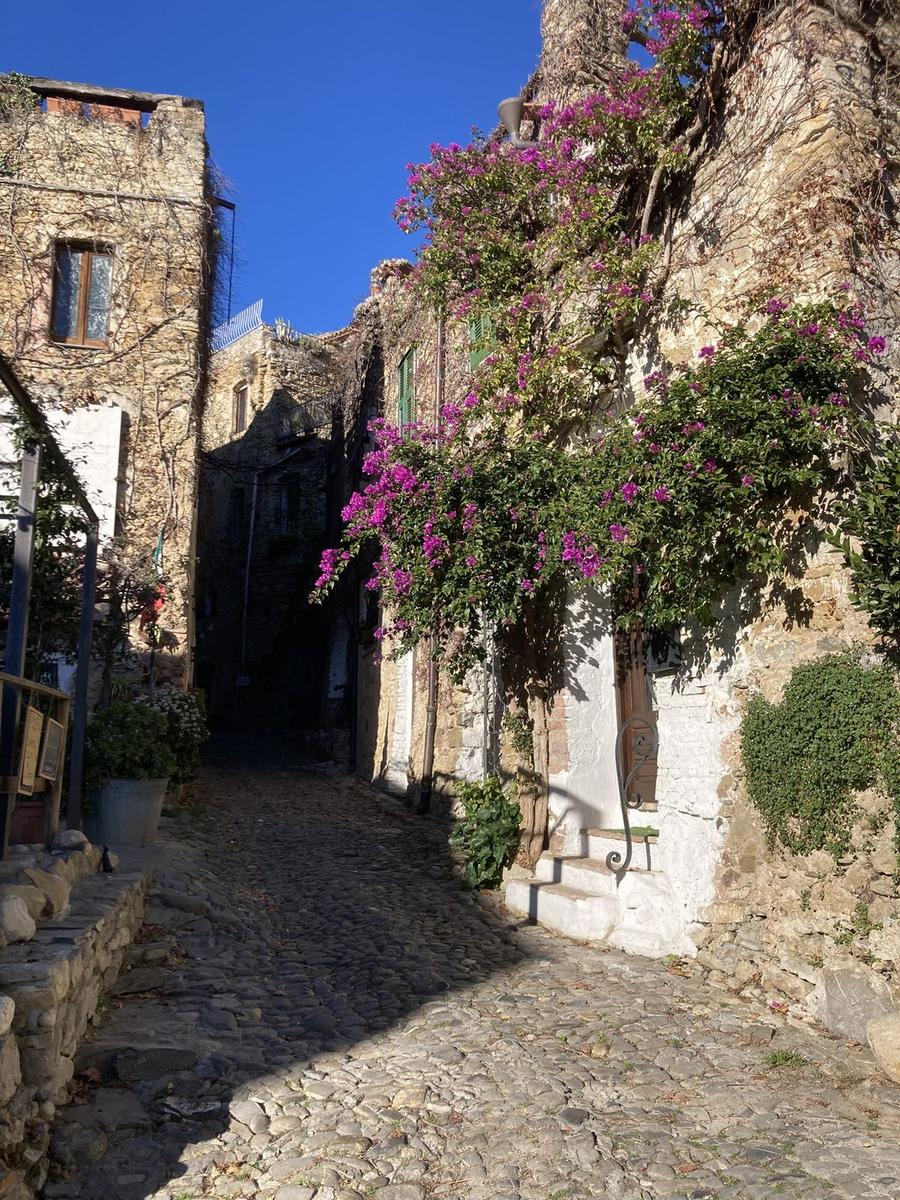
Leaving Santo Stefano, a road winds between olive trees and herbs up to Bussana Vecchia — an artists' village on the hill, where ruins and creativity live side by side.
Abandoned after the 1887 earthquake, the village was brought back to life in the 1960s by artists — colour, music, atmosphere. Today it's a magical place: overgrown alleys, open studios, mosaics, poems, sea views.
In the ruined old church — roofless but full of soul — summer concerts take place under the stars.
In our apartment hang two works from here, one with olive trees. A small piece of the tale brought down from the hill. Bussana Vecchia stays with you.
Hiking — Between sea, hills and silence
Hiking around Santo Stefano al Mare is a delight. You're in nature in no time — olive groves, chapels, panoramas, small villages where time slows. Routes vary from gentle paths to challenging mountain loops, always with sea or valley views.
A few favourites:
- Loop to the Chiesa di San Giovanni dei Prati — 6 km, 2 to 2.5 h, light climb, beautiful view, picnic spot by a chapel.
- Dolcedo — Laghetti di Lecchiore — 5.5 km, 1h45, fresh forest paths and natural pools.
- Monte Faudo loop — 11 km, 4 h, sustained climb, impressive views of mountains and sea.
- Badalucco and surroundings — 6 km, 2 h, olive terraces, bridges and river paths.
Most routes are on Komoot or Outdooractive (links available on request or on-site).
Triora — The village of witches
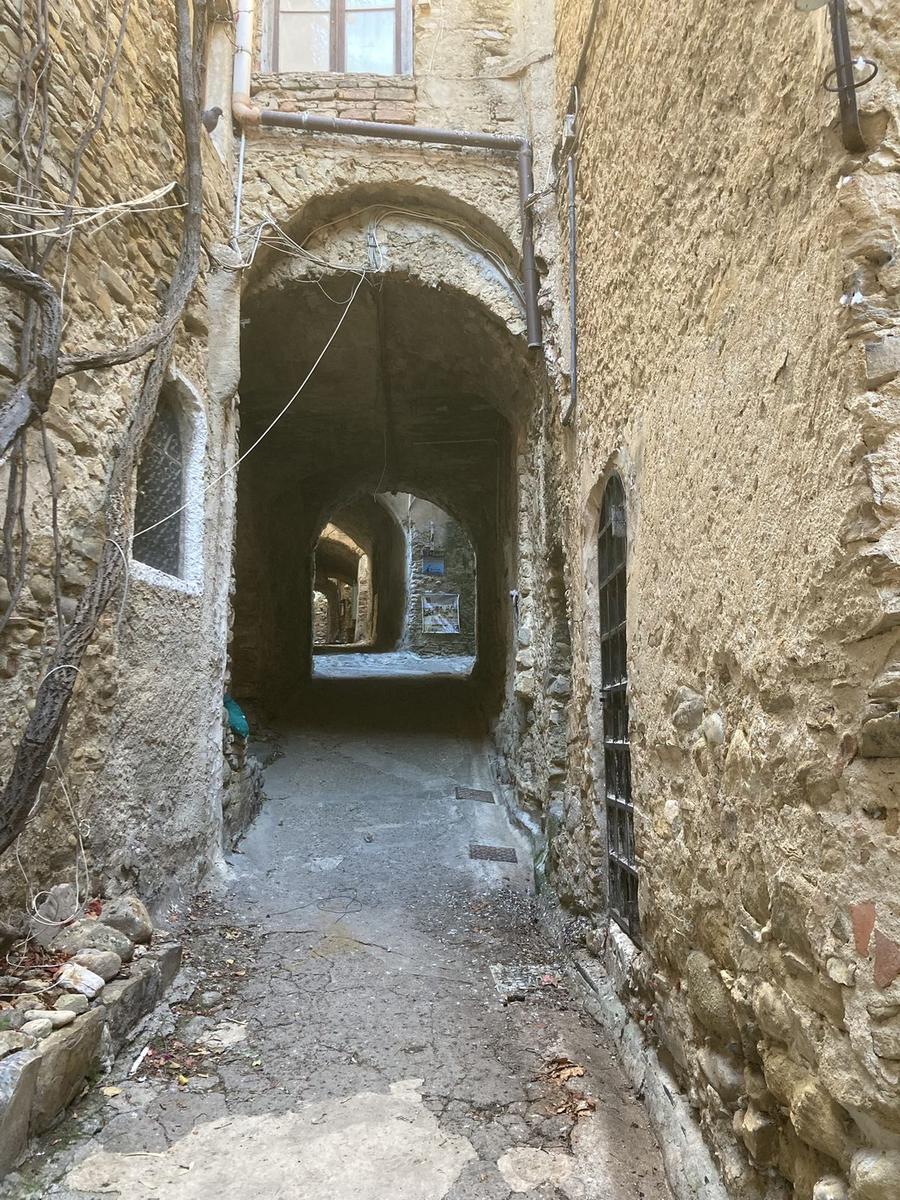
Inland, high in the Argentina valley, lies Triora. The sea is far; here it smells of forest, wood fire and secrets.
Triora is known as the witches' village. In the 16th century, dozens of women were accused of witchcraft — a dark, true chapter that still echoes in the narrow alleys and old court building. On a rooftop a bronze cat keeps watch: proud, mysterious, unyielding.
But Triora is more. The village breathes silence, nature and wonder. The Maritime Alps stretch out impressively, light changes with the seasons, atmosphere is intense. In the museum and shops: herbs, spell books and amulets — perfect for imaginative children.
No mass tourism — a place for those who like to get lost: among vaults and walls, in mushroom-filled forests or at craft markets. Triora is a world apart.
Dolceacqua and the valley of stone and sun
On the French border lies Ventimiglia, gateway to the Nervia valley. The lower town buzzes on market days. Climb up to Ventimiglia Alta for a quieter world of stairs, alleys, loggias and ancient churches.
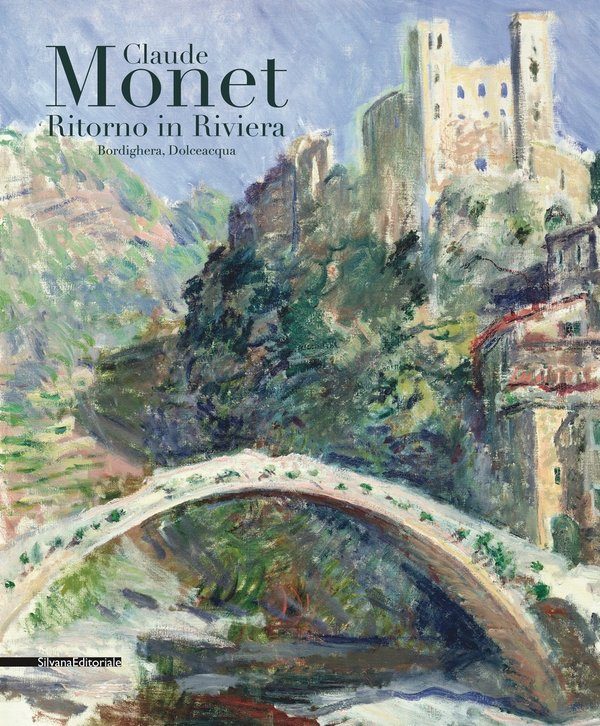
From Ventimiglia, the road winds inland between vineyards, woods and olive slopes. You reach Dolceacqua, perhaps the most picturesque village in the region. The medieval bridge over the Nervia, the Castello dei Doria and the tiered houses inspired Claude Monet's famous words: "a jewel of light and balance." Try the local Rossese wine: spicy, light, surprising.
On the hill opposite, Apricale, a living picture book of murals. Perinaldo, higher up, with open views and starry skies (and an old observatory). Isolabona, down in the valley, small and welcoming, with bridge, squares and summer pace.
The Nervia valley isn't a place of spectacle, but of detail. Worn stone, soft light, silence, wine and stories that linger.
Dolcedo & Badalucco — Between olive trees and stone bridges
Heading inland from Santo Stefano, you discover villages where life still moves to the rhythm of seasons, river and the scent of olive oil. Dolcedo and Badalucco aren't places of grandeur — they're places of stillness, simplicity, beauty in detail.
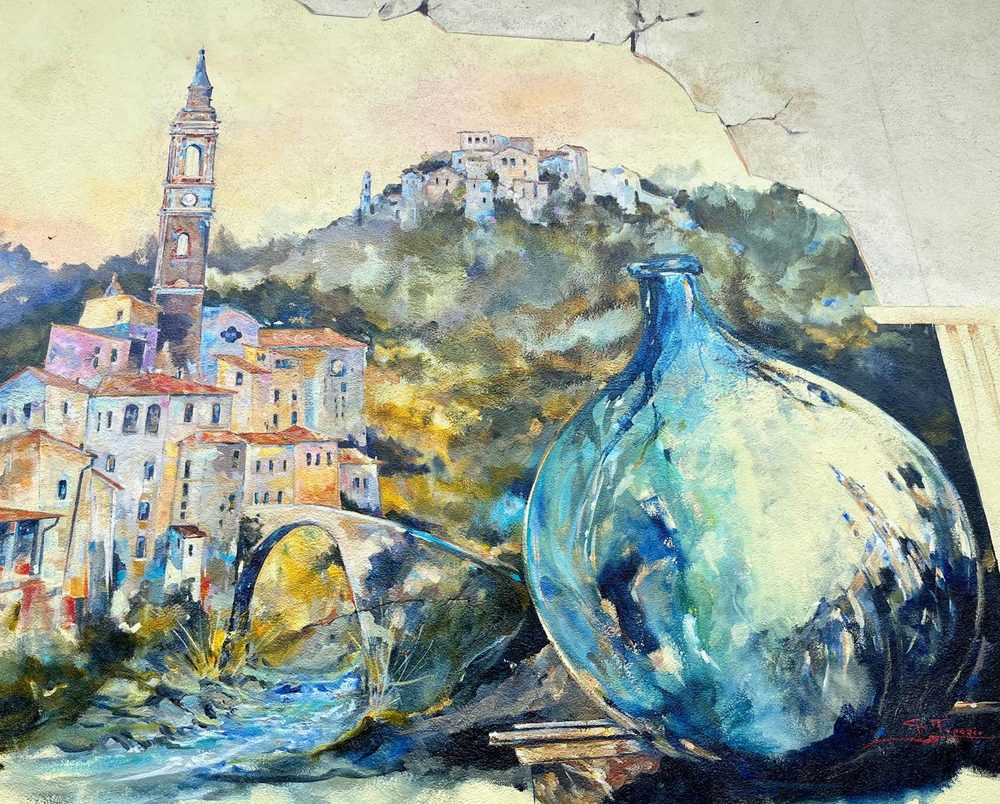
In the Prino valley, Dolcedo sits surrounded by olive terraces. Born around mills and water, you still feel it. You walk past streams, arched bridges and pastel houses. The church of San Tommaso surprises with its baroque splendour, on the square you taste local oil or trofie with pesto.
Further west, in the Argentina valley, lies Badalucco. Water and rosemary too — same atmosphere, but a sturdier village. Façades carry colourful murals, alleys wind past stairs and niches. In September the Stoccafisso festival brings everything to life.
Sea adventure — from snorkel to whale
The Ligurian coast isn't only to look at — it's to live. Between Santo Stefano and Arma di Taggia, endless ways to take to the water — or below it.
Diving & snorkelling
At the Marina degli Aregai harbour, hire snorkel gear, join a trip, or learn to dive. Full courses available — calm, clear water and professional guidance.
Boat hire & dolphin watching
For an unforgettable experience, hire your own boat. We recommend Cantiere Nautico Riva Ligure fratelli Diurno in Arma di Taggia: warm welcome, smooth service, clear prices (± €200 for an afternoon in high season, no licence needed). On the way: rocky coastline, bays, open sea — and with luck, dolphins or even whales. This region is part of the Santuario dei Cetacei marine sanctuary.
SUP & pedalo
At Il Vascello beach in Santo Stefano, hire SUP, pedalo or kayak easily. Perfect for an hour on the water — great with children.
Tasting Liguria — pure, local, made with love
In Liguria you don't just eat well — you eat real. Fresh, honest, full of flavour. A plate of trofie al pesto, a piece of fresh focaccia by the sea. It's all about the simplicity of good ingredients: fish that still tastes of the sea, olive oil from the valley, tomatoes that smell of sun.
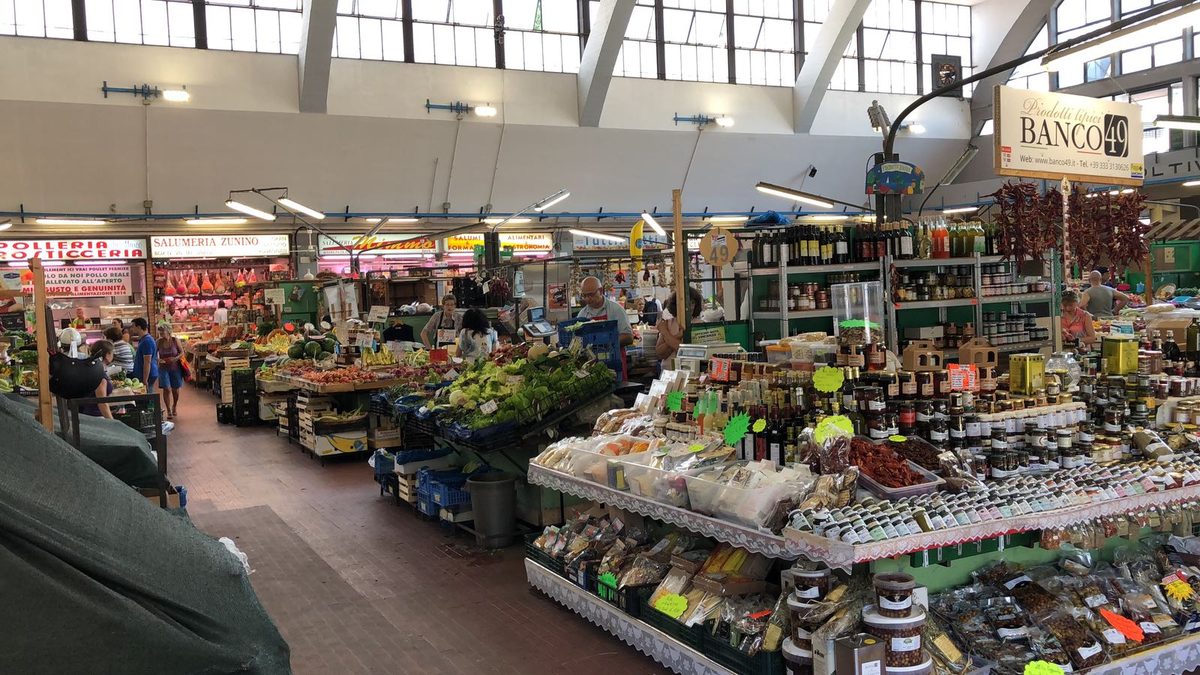
If you love to cook, the village has it all: a greengrocer with seasonal local produce, a small grocer's of regional specialities, a butcher happy to help. For more, the Sanremo market — on market days a lively, fragrant abundance.
But you don't always need to cook. Santo Stefano has several good spots. La Baia Azzurra serves wonderful fish dishes right on the beach. Il Vascello has feet-in-the-sand summer and transparent dining domes with sea view in winter.
Don't miss an ice cream at Mani — a real find. Artisan gelato, excellent coffee, beautiful pastries, and a stylish afternoon aperitif. A glass of prosecco arrives with an abundance of homemade nibbles. All fresh, made with care, served with a smile.
For those who love to shop
Shopping here is relaxed. In Diano Marina, Imperia and Sanremo, plenty of lovely shops — boutiques, local specialities, fashion, artisan goods. Perfect for a quiet afternoon stroll punctuated by a sunlit terrace.
Extras — for adventurers
Climbing (experienced climbers)
Near Monte Faudo and the valleys around Ventimiglia: limestone routes. Well-known spots include Sparavecchia and around Caravonica.
Swimming in river pools
Around Badalucco and Dolceacqua, natural swimming spots like the small falls at the Passerella del Santuario and the cool pools along the Nervia.
Mountain biking
The Dolceacqua — Monte Faudo route offers solid climbs, technical sections and panoramic views. From Badalucco, singletracks through olive groves and woods.
Wine tasting
A must: wine houses around Dolceacqua, known for Rossese di Dolceacqua DOC. Recommendations: Cantina Sociale di Dolceacqua and Cantine Doria.
Rafting
For thrill-seekers, the Nervia valley offers rafting in spring and autumn with experienced guides. Trips of 2 to 3 hours, from about age 12. Booking recommended.
Ready to experience this yourself?
Book your stay and discover the Riviera of Flowers at your own pace.
Reserve your stay